👤
The Victims
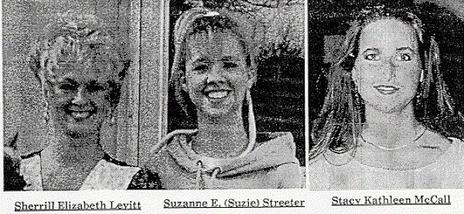
Suzanne 'Suzie' Harrison (19), Stacy McCall (18), and Sherrill Levitt (47, Suzie's mother) disappeared from Sherrill's home at 1717 East Delmar in Springfield, Missouri, in the early morning hours of June 7, 1992. Stacy and Suzie had attended their high school graduation ceremony the previous evening, June 6, and had planned to spend the night at Sherrill's house. The three women were never seen again. Their cars, purses, and personal belongings were left at the house. The front porch light bulb was broken — possibly a signal or a result of struggle. A half-smoked cigarette belonging to none of the three was found in a bathroom ashtray. There was no sign of forced entry, no evidence of struggle, and no blood. Their disappearance — seemingly mid-routine and total — remains one of the most baffling missing-persons cases in Missouri history. No remains have ever been found.
🕰
Historical Epoch
Springfield, Missouri in 1992 was a mid-sized Midwestern college city — home to Missouri State University and several large churches. It projected an atmosphere of Midwestern safety and community. The disappearance of three people from a secured home with no trace whatsoever was deeply shocking to the community's self-image. The early 1990s also predated the widespread use of home security cameras, cell phone GPS tracking, and the DNA databases that today make such total disappearances far rarer. The NCIC missing persons database existed but was far less comprehensive than its modern equivalent.
🔍
Possible Killers
A specific named suspect has been investigated by the Springfield Police Department and publicly discussed by true crime researchers, though he has not been charged. He was a man known to visit establishments near the Levitt home and had a history of predatory behavior toward women. He died in 2015. Several Springfield detectives have indicated off-record belief in this individual's guilt. A second theory involves a predator who knew either Suzie or Stacy from their social circle — the graduation night context means the women may have encountered someone at an earlier party who followed them.
⚖
Possible Motives
Predatory abduction: The total absence of any physical evidence of struggle or forced entry suggests either that the perpetrator was known and initially trusted by the women, or that he had a method of gaining entry and control that left no trace. The simultaneous disappearance of all three women — including an adult woman in her own home — implies an abductor of considerable physical capability or a scenario in which the women were separated and subdued individually.
📁
The Investigation — and Why It Failed
Springfield Police Department investigated intensively in 1992. The FBI was involved. Hundreds of tips were received. The house was processed for forensic evidence. The half-smoked cigarette was collected but produced no useful DNA with 1992 technology. A cadaver dog sweep of the property and surroundings in later years produced reactions in several areas but no remains were located. The case has been reopened multiple times, most recently in connection with the death of the primary person of interest in 2015.
🧪
Key Physical Evidence
Three vehicles left at the home. Three sets of personal belongings (purses, keys). Broken porch light bulb. A half-smoked cigarette belonging to none of the three women. No blood, no signs of struggle, no forced entry. No remains ever found.
🧠
Psychological Profile of the Perpetrator
A person likely known to at least one of the three women — or at least trusted enough by them not to immediately raise alarm. Physical capability sufficient to subdue three adult women, likely sequentially. Knowledge of the Levitt home's location and routines. Access to a vehicle and a remote disposal site for three bodies.
🔗
Connections to Other Cases
The Springfield Three case is sometimes grouped with other Midwestern 'total disappearance' cases of the 1980s–90s where multiple people vanished without a body being found. The graduation night context — a high-energy social evening followed by an overnight stop — is a specific vulnerability profile that has appeared in other cases.
💡
What Additional Evidence Could Solve This Case
The half-smoked cigarette from the bathroom ashtray — if preserved — should be resubmitted for modern DNA analysis. Even a partial DNA profile could identify whose cigarette it was. The CODIS national database could be searched against the profile. Ground-penetrating radar of the property at 1717 East Delmar (which has been renovated and resold) and adjacent areas has reportedly been conducted but the results have not been publicly detailed.
🔎
Steps for Amateur Sleuths Today
The Springfield Police Department has a dedicated tip line for the case. Join the active Facebook community 'Springfield Three: Bring Them Home' which regularly surfaces new witness accounts and timeline details. Read Lili Wright's coverage and the extensive Websleuths threads, which compile publicly available investigative details. Access Springfield News-Leader digital archives from June 1992 onward. If you have information about Springfield social scenes or establishments from the early 1990s, contact detectives directly.
📚
Further Resources
Books: No single definitive account. Podcast: 'Disappeared: The Springfield Three' episode (Investigation Discovery). Website: Websleuths.com Springfield Three thread. Community: 'Springfield Three: Bring Them Home' Facebook group.
📅
Timeline of Key Events
Jun 6, 1992 evening
Suzie Harrison and Stacy McCall attend high school graduation; afterward attend a graduation party
Jun 7, 1992 early am
Suzie and Stacy arrive at Sherrill Levitt's house to sleep over
Jun 7, 1992 morning
Friends come to pick up Stacy and Suzie; find house empty, cars present, belongings left
Jun 7, 1992
Police report filed; initial investigation begins
1992–present
No remains found; no charges filed
2015
Primary person of interest dies without being charged
📚
Further Resources
Share
Loading…
0 theories on file